
Suitable for housings, bodies and structural castings where part size, internal passages, machining allowance and practical tooling economics drive the route.
Sand Casting Services in China
Sand Casting Services for Large & Heavy OEM Components
TIANHUI provides sand casting services in China for large, heavy and core-intensive OEM components. For housings, bodies and structural castings, the practical process decision is usually driven by part size, internal passages, alloy, machining stock and any pressure or leak requirement. We review those finished-part needs before pattern and core design begin.
Capability at a Glance
Sand Casting Capability
TIANHUI combines sand casting with pattern and core planning, machining and functional testing for large, heavy and core-intensive components. The capability data below summarizes the main production range and finished-part scope.
Current confirmed single-piece weight reference. Overall envelope is reviewed by project rather than published as one fixed limit.
General practical reference. Local wall sections, transitions, alloy and core conditions are reviewed from the actual part geometry.
Typical sand-casting tolerance range. Final tolerance depends on part size, material, molding route and geometry.
Surface condition varies with molding method, alloy and geometry. Functional bores, sealing faces and datums can be finish-machined as required.
Material grade and standard are confirmed against strength, corrosion, temperature, pressure and service requirements.
Typical raw-casting sample lead time for standard projects. Large-part projects may require approximately 30 days for tooling plus about 10 days for sample production.
Heat treatment, CNC machining, blasting, coating, dimensional inspection and pressure or leak testing can be integrated where required.
Capability note:The 1,000 kg single-piece weight, wall and tolerance figures are reference capabilities. Overall envelope and the exact molding route remain project-specific and are confirmed from the drawing, material and core strategy.
Process Fit
Choose Sand Casting When Size, Cores and Machining Drive the Part
Sand casting is often the practical route when the component is too large, too core-intensive or too machining-dependent for a simpler near-net process decision.
Large & Heavy Geometry
Suitable for many larger housings, bodies and structural castings where overall size and section distribution shape the manufacturing route.
Internal Passages
Core strategies can create cavities and flow passages that are difficult or inefficient to machine from solid material.
Machined Functional Surfaces
Critical bores, sealing faces and datums can be finished by CNC while the casting carries the larger near-net geometry.
Tested Finished Housings
Where required, machining, pressure or leak testing and finishing can be coordinated after casting as part of the delivery route.
Sand Casting Route
From Casting Feasibility to a Machined and Tested Component
The route is defined around pattern and core feasibility first, then machining, testing and finishing are added according to the actual function of the finished component.
Drawing & Casting Envelope
Review alloy, overall geometry, section changes, internal passages, machined interfaces and any pressure or sealing requirement.
Pattern & Core Plan
Define pattern construction, core locations, core support and access based on internal geometry and production quantity.
Feeding & Machining Allowance
Plan gating, risers, local section control and machining stock around casting integrity and final cleanup requirements.
Mould, Pour & Cleanup
Complete mould and core making, melting, pouring, shakeout, cleaning and initial casting inspection under the approved route.
Heat Treat, CNC & Testing
Coordinate heat treatment, machining, blasting, coating and pressure or leak testing where specified by the application.
Final Inspection & Release
Verify material, critical dimensions, functional requirements and agreed documentation before finished-part release.
Shop Floor & Process
Sand Casting on the Shop Floor
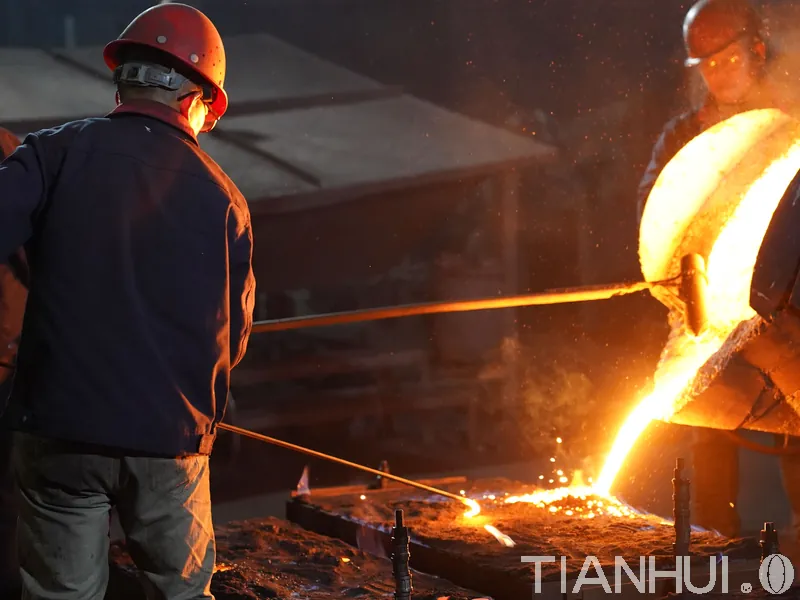
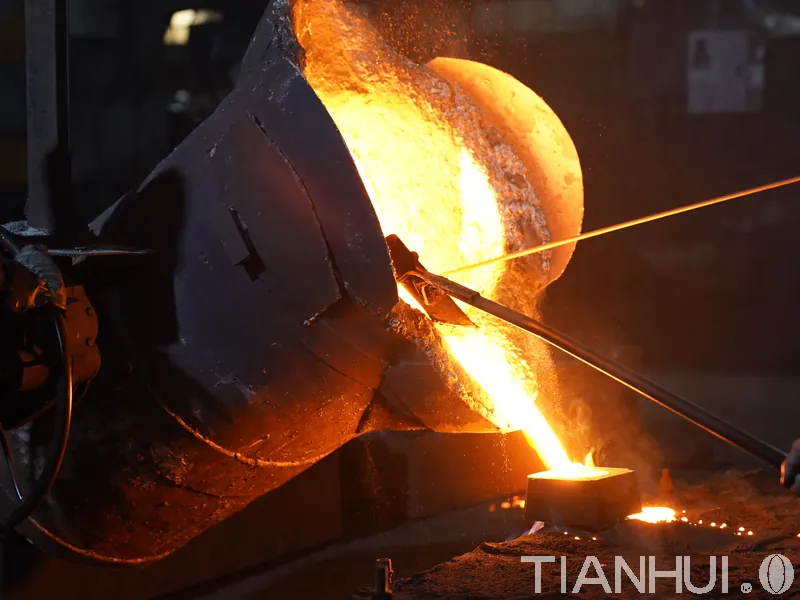
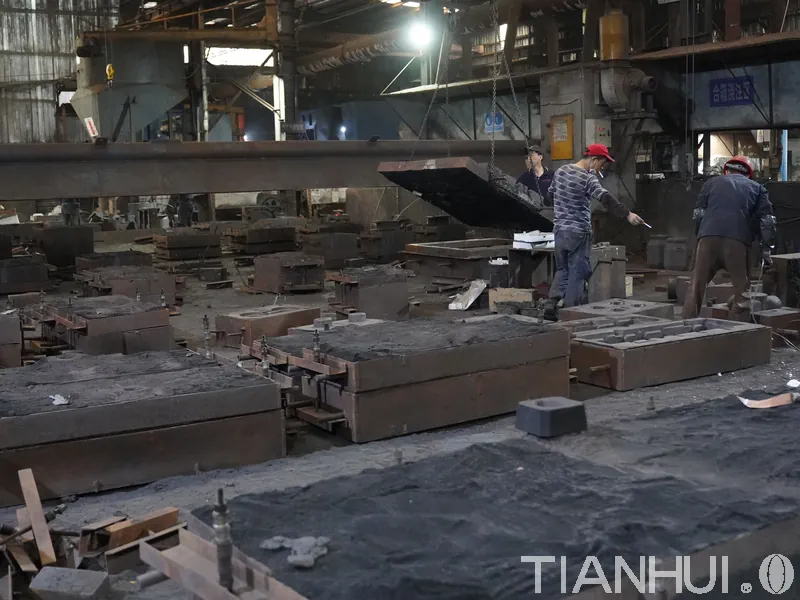
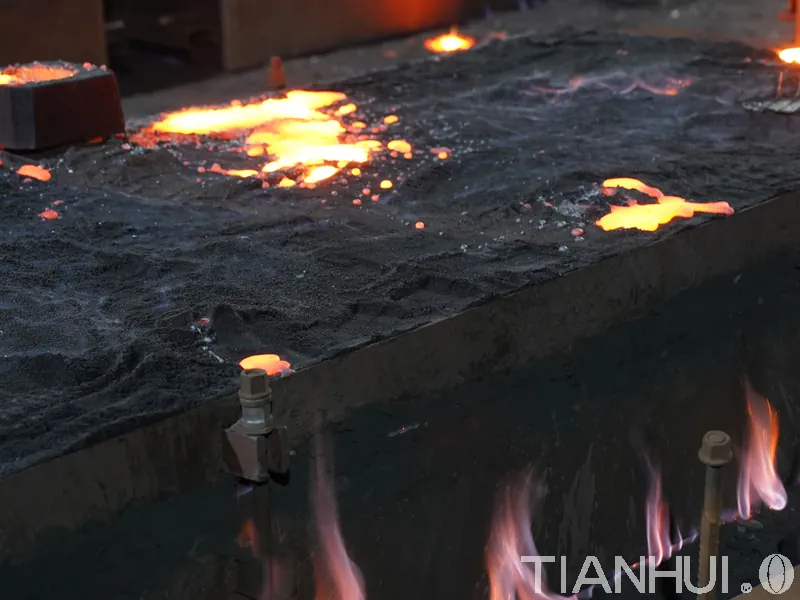
Representative production images showing pattern and core preparation, molding, pouring, shakeout and castings before machining or finishing.
Engineering Considerations
Start With the Part Requirements
Good casting results depend on selecting and controlling the process around the actual component rather than treating sand casting as a one-size-fits-all route.
| Requirement | What We Review | Manufacturing Impact |
|---|---|---|
| Part Size & Weight | Overall dimensions, wall sections and casting weight | Influences pattern, mold, handling and pouring requirements. |
| Material | Specified alloy and required mechanical properties | Determines melting, pouring and process controls. |
| Geometry & Cores | Parting lines, internal passages, wall sections and draft | Influences pattern, core and mold design. |
| Machining Allowance | Critical finished dimensions, datums and machined surfaces | Defines stock allowance and secondary CNC operations. |
| Production Volume | Prototype, low-volume or repeat production requirements | Influences tooling and production planning. |
Pattern, Cores & Sample Approval
The Pattern Is Part of the Manufacturing Process
For sand castings, pattern and core decisions directly affect draft, parting, wall consistency, internal passages and machining allowance.
Drawing Review
Identify parting direction, draft, wall transitions, internal cavities, critical machining surfaces and functional requirements.
Pattern / Core Box
Tooling is planned around shrinkage, machining allowance, mold handling and the required core strategy.
Trial Pour
Initial castings are reviewed for filling, shrinkage, core position, surface condition and available machining stock.
Machining & Test
Critical features are finished and agreed dimensional or functional checks are completed on sample parts.
Production Release
The approved pattern, core arrangement, process controls and inspection scope become the repeat-production reference.
Tooling terms:Pattern ownership, core-box ownership, revision costs, storage and the approval status of the first machined sample should be clear before repeat orders begin.
Materials
Sand Casting Materials
The final material should follow the drawing, performance requirements, casting conditions and application environment.
Gray & Ductile Iron
Commonly considered for housings, machinery and structural cast components requiring practical strength and wear performance.
Carbon & Alloy Steels
Used where strength, toughness and demanding mechanical service requirements are important.
Stainless Steels
Selected for applications requiring corrosion resistance together with suitable mechanical performance.
Aluminum Alloys
Useful where lower density and component weight are important design considerations.
Copper Alloys
Considered for selected components requiring conductivity, corrosion resistance or other alloy-specific properties.
Specified Grades
Other grades can be reviewed when the drawing or project requires a particular material standard.
Have a specified material grade?Include the standard, grade, estimated quantity and machining requirements with your drawing.Custom OEM Parts →
Project Example
Sand Casting Followed by Difficult Finish Machining
The finished-part requirement often determines whether a sand casting project succeeds. This documented pump-housing case combines casting tolerance, deep-hole machining, surface finish and functional testing.
Metering Pump Housing
Sand casting followed by precision CNC machining and air-tightness testing.
- GB/T 6414-CT8 casting tolerance
- ISO 2768-fH machining reference
- Selected dimensions to IT7
- Surface roughness down to Ra 0.4
- φ19H7 bore with 230 mm depth
Why the Blank and Machining Route Must Be Planned Together
A 230 mm deep H7 bore needs stable stock, a clear datum strategy and enough cleanup allowance. Pattern design and machining planning therefore form one finished-part route.
- Finished datums defined before pattern release
- Deep-bore and sealing areas protected with machining stock
- Air-tightness criteria agreed before production
- Casting, machining and testing treated as one supply scope
Featured Products
View All Products →Typical Components Manufactured by Sand Casting
Examples below show sand-cast component types where pattern and core design, machining allowance and functional testing may all be part of the finished-part route.
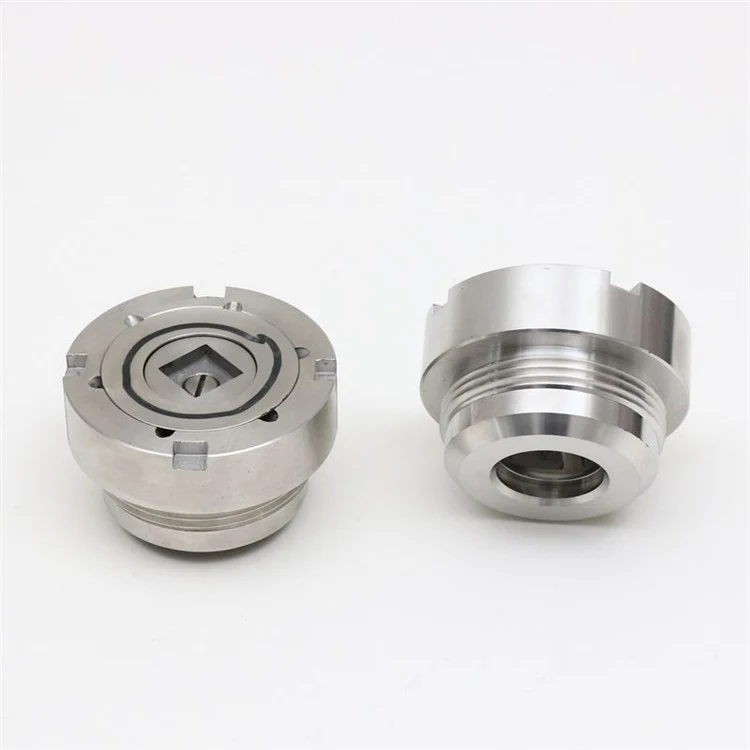
SAND CAST PART
Sand Discharge Body
Sand Discharge Body. Part geometry and material are defined by the order drawing.
View Product →
SAND CAST PART
Sand-Cast Gray Iron Forklift Component
Sand-Cast Gray Iron Forklift Component. The material specified for this part is Gray Iron.
View Product →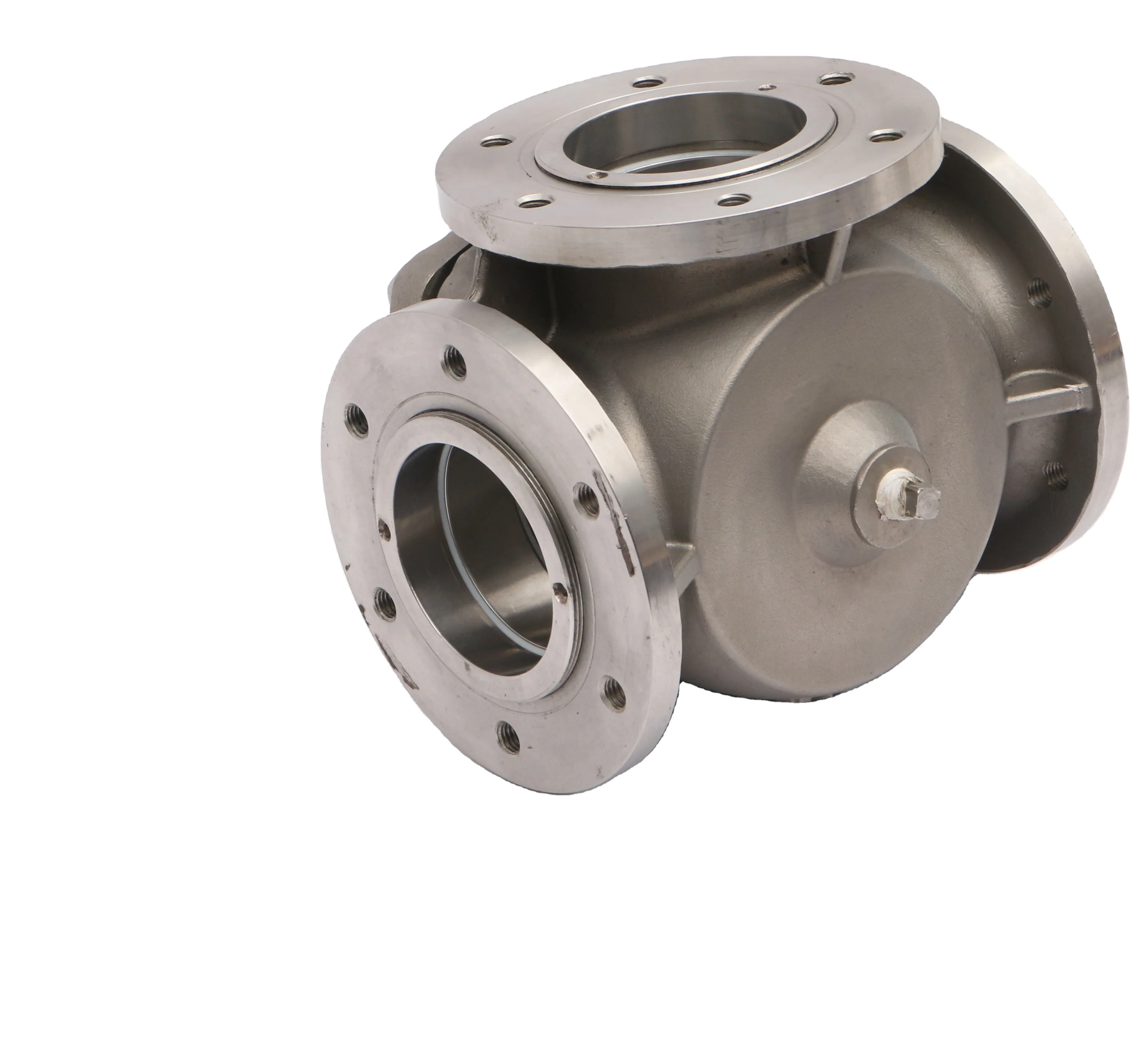
SAND CAST PART
Hydraulic Diaphragm Metering Pump Head
Hydraulic Diaphragm Metering Pump Head. A head item for a diaphragm metering pump assembly.
View Product →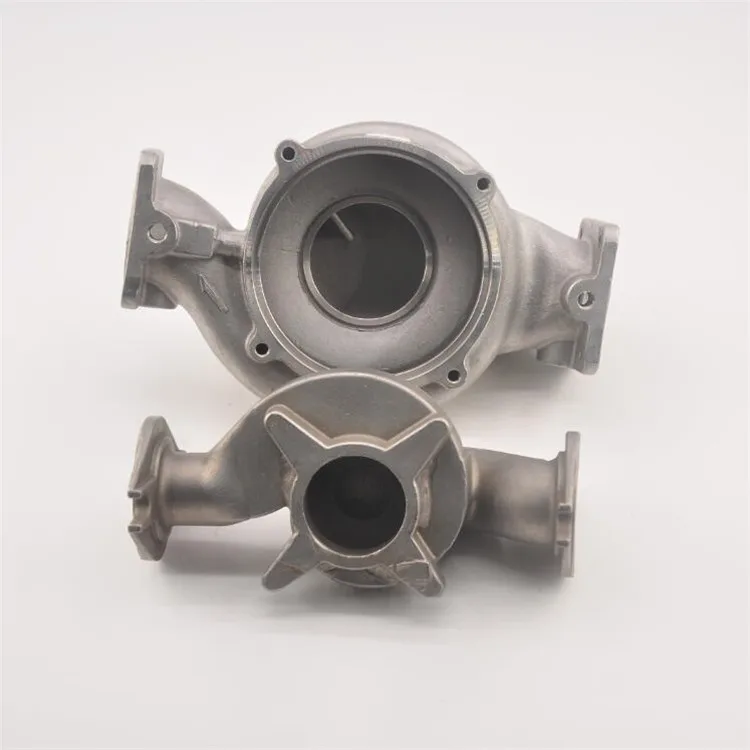
SAND CAST PART
Machined Investment-Cast Stainless Steel Turbine Housing
Machined Investment-Cast Stainless Steel Turbine Housing. A housing item for the turbine assembly named in the product record.
View Product →Industries & Applications
Where Sand Casting Is Commonly Applied
Sand casting is well suited to larger housings, cored flow passages and heavy-duty components where size, geometry and machining economics must be balanced.
Pump & Valve Components
Pump casings, valve bodies and fluid-handling housings with internal passages, machined sealing faces, bores and pressure-related requirements.
Industrial Equipment Components
Machine housings, bases, covers and structural castings where robust sections and finish-machined interfaces are more important than fine as-cast detail.
Agricultural Machinery Parts
Cast housings, supports and drivetrain-related components for tractors, implements and agricultural machinery.
Forged Components
Heavy-duty cast components for construction and earthmoving equipment where section size, durability and machining access drive the route.
Process Integration & Secondary Operations
Integrate Casting, Machining, Testing and Surface Treatment as One Route
Secondary operations are planned around the finished-part requirement so quality, dimensional stability, lead time and total manufacturing cost are optimized across the complete route.
CNC Machining
Datums, bores, flange faces, sealing surfaces, threads and mounting features can be machined from the approved casting allowance.
Heat Treatment
Heat treatment can be included where the specified material, hardness, dimensional stability or mechanical performance requires it.
Surface Preparation & Protection
Shot blasting, cleaning, painting, coating or other specified protective finishes can be reviewed around the alloy and service environment.
Testing, Inspection & Packaging
Where applicable, pressure or leak requirements, dimensional inspection, agreed records and export packaging can be included in the project scope.
Quality Control
Sand Casting Quality Starts With Pattern, Core and Feeding Control
For large, cored or machined castings, quality depends on controlling the mould and core strategy, material condition, casting integrity, machining interfaces and any pressure or functional requirement.
Pattern & Core Review
Review parting direction, core location, internal passages, machining stock and critical wall or sealing areas before production.
Mould, Melt & Process Control
Material and casting-process checkpoints are planned around the selected alloy, geometry and areas where feeding or internal complexity can affect the finished part.
Casting Integrity & Machining
Cast condition, critical dimensions and machined interfaces are verified according to the drawing and the functional risk of the component.
Pressure, Leak & Final Release
For housings and fluid-handling parts, any pressure or leak test is tied to a defined medium, pressure, hold time and acceptance limit before shipment.
Material chemistry and certificates can be matched to the agreed iron, steel or alloy requirement.
Mechanical or metallurgical checks can be included where the material specification or project control plan calls for them.
Machining datums, bores, sealing faces and other critical cast or finished features can be inspected with suitable equipment.
Functional acceptance is defined around the actual housing, valve or fluid-handling requirement rather than a generic “leak tested” statement.
For pressure-containing or sealing components, define test medium, test pressure, hold time, allowable leakage, sampling level and required report before quotation. For cored parts, also identify internal passages or areas that require special verification.
Process Selection
When Sand Casting Is the Practical Route—and When It Is Not
Sand casting is often a strong route for larger bodies, housings and core-intensive shapes, but the decision should include machining stock, tolerance and surface expectations, testing requirements and annual quantity—not tooling price alone.
The component is relatively large or heavy, cores or internal passages are important, and critical bores, faces or sealing areas will be finish machined after casting.
The part is smaller, geometry is more intricate, finer as-cast detail matters, and reducing machining stock can justify the precision casting route.
Compare Investment Casting →Non-ferrous repeat volumes are high enough to justify dedicated dies and production efficiency becomes the dominant cost driver.
Compare Die Casting →The application is strength- or fatigue-critical and directional material flow matters more than the ability to cast complex cavities.
Compare Forging →
FAQ
Sand Casting RFQ, Cores, Machining & Testing FAQs
Practical questions about large castings, pattern and core requirements, machining allowance, pressure-related testing, inspection and quotation inputs.
Sand casting is often the more practical route for larger or heavier components, housings and core-intensive shapes where fine as-cast detail is less important and finish machining is already expected. Investment casting can be better for smaller, more intricate parts where near-net detail and reduced machining stock have greater value.
Yes, internal passages can be produced with cores when the geometry, core support, moulding route and cleaning access are suitable. Core design should be reviewed early because it affects casting feasibility, dimensional stability and downstream inspection.
Yes. Bores, flange faces, sealing surfaces, threads, mounting datums and other critical interfaces can be finish machined after casting. Machining allowance should be planned together with the casting route rather than added after the casting design is fixed.
Pressure, air-tightness or other functional testing can be included when required by the component and drawing. The test method, pressure level, holding time, sampling plan and acceptance criteria should be defined before quotation and production.
Provide the drawing or 3D model, material standard, approximate casting size and weight, internal-passage or core requirements, machining areas, critical tolerances, annual quantity, surface treatment and inspection or functional-test requirements.
Machining allowance is reviewed from casting size, geometry, material, mould and core conditions, datum strategy, distortion risk and the required finished features. Extra stock should be added only where it supports a stable finished part, because unnecessary allowance increases material removal and machining time.
Manufacturing Review
Request a Manufacturing Review →
Send Us Your Sand Casting Drawing
Our sand casting service supports larger and heavier metal components used in industrial machinery, agricultural equipment and construction applications. TIANHUI MACHINE works with suitable cast iron and steel materials and can coordinate casting with subsequent machining. Contact our China factory with your drawings and part requirements.
Send your drawing or 3D model together with the material grade, quantity, casting envelope, critical machining areas, pressure or sealing requirements and inspection scope. We will review the pattern, core, casting, machining and testing route before quotation.